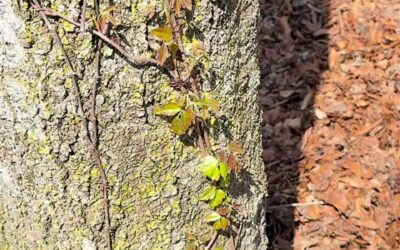
Poison Ivy Taking Over a Fence in Webster, NY
This poison ivy removal project in Webster, NY shows one of the hardest situations homeowners run into: poison ivy that has taken over a fence line and started weaving itself into everything around it.
At first, it may look like a vine problem. But once you look closer, the poison ivy is not just sitting on the fence. It is wrapped around posts, climbing into nearby trees, growing through shrubs, and spreading through the surrounding area.
That is where the real problem starts.
Entanglement Is the Hard Part
Entangled poison ivy is difficult because you cannot just grab one vine and pull it out.
The plant may be wrapped around fence posts, tucked behind boards, running through branches, and mixed into other plants that the homeowner may want to keep. Every cut has to be intentional. Every pull has to be controlled. If you start yanking without checking where the vine goes, you can break stems, spread contaminated plant material, damage nearby landscaping, or miss the root system entirely.
This is why fence-line poison ivy jobs can be more complicated than they look.
Fence Lines Are Easy Places to Miss Poison Ivy
Fence lines create perfect hiding places. Birds drop seeds. Shrubs grow thick. Grass and weeds fill in around the base. Homeowners trim what they can see, but the poison ivy keeps using the fence, trees, and nearby plantings as support.
By the time it becomes obvious, the plant may already be established in several directions.
Common problem areas include:
fence posts
chain link or wood fencing
tree bases near the fence
shrubs planted along the property line
overgrown corners
brush piles
neighboring vegetation
areas that only get trimmed once or twice a year
Why This Type of Removal Takes Time
The goal is not just to make the fence look better for a few weeks. The goal is to remove the poison ivy carefully enough that the main vines, stems, and root areas are addressed.
That usually means working slowly through the mess, separating poison ivy from the plants around it, cutting access points, tracing vines back toward the ground, and bagging contaminated material as it is removed.
Entanglement is the reason these jobs can take longer than expected. The visible poison ivy is only part of the project. The rest of the work is figuring out where it starts, where it travels, and what else it is wrapped into.
Before You Start Cutting
If poison ivy is tangled into a fence, tree, or shrub line, do not start trimming blindly.
Look at the base of the fence posts. Check where vines enter the ground. Look for hairy climbing vines on trees or posts. Watch for leaves mixed into shrubs. Be careful with tools, gloves, clothing, and debris because poison ivy oil can transfer long after the plant has been cut.
This is especially important if the poison ivy is near a walkway, gate, play area, dog area, or property line where people regularly brush against it.
Need Help Identifying Poison Ivy on a Fence Line?
If you are not sure whether the vine on your fence is poison ivy, send clear photos before cutting it back. Include close-ups of the leaves, the vine, the base of the plant, and the surrounding area.
Fence-line poison ivy can be manageable, but once it is tangled through trees and shrubs, it needs a plan.


Poison Ivy Field Notes:
Real examples, seasonal observations, and removal notes from poison ivy projects around the Rochester, NY area.