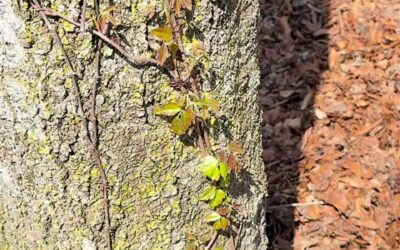
A gardener found this out the hard way after cutting back a shrub.
From the outside, it looked like normal spring cleanup: overgrown branches, dead stems, vines, weeds, and all the usual stuff that gets ignored over winter. But once the shrub was cut back, the problem became obvious. Poison ivy had been growing through it, wrapped into the branches, and hidden in the middle of the plant.
He had no idea it was there.
That is exactly how a lot of spring poison ivy exposure happens.
People go outside when the weather finally changes. They start trimming shrubs, pulling old growth, cleaning fence lines, cutting vines, clearing garden beds, and grabbing handfuls of yard debris without really looking at what is mixed in.
Poison ivy does not always announce itself as a perfect “leaves of three” plant growing neatly by itself. In spring, it can be tangled through shrubs, wrapped around stems, running along the ground, climbing fences, or hiding under last year’s leaves. It can look like part of the landscape until someone starts cutting, pulling, or hauling it.
For gardeners, this is one of the easiest exposures because your hands are right in it.
And I get it. I used to garden bare-handed all the time. I hated garden gloves. Most of them are bulky, awkward, and useless if you actually want to feel what you are doing. They might be fine for heavy wood, brush, or thorns, but for real gardening, I always wanted my hands free.
That is why nitrile gloves make more sense for poison ivy season.
They let you feel what you are touching. You can pull small weeds, separate stems, work around roots, and still keep your hands protected. More importantly, when you are done, you can take them off and throw them away instead of wondering whether your gloves, tools, steering wheel, phone, or doorknob now have poison ivy oil on them.
That is the part people miss.
The rash does not usually happen because someone saw poison ivy and made a bad choice. It often happens because they never saw it at all.

Common places where poison ivy gets missed
Hydrangeas, arborvitae, yews, boxwoods, lilacs, forsythia, rhododendrons, azaleas, junipers, pine trees, and old foundation plantings. These plants are not causing the poison ivy, and poison ivy is not especially attracted to them. The problem is visibility. Full shrubs and evergreens create cover. Gardeners reach in, trim, pull, rake, or clean out debris without realizing poison ivy is growing through the middle, around the base, or along the ground underneath.
Poison Ivy Field Notes
Poison Ivy Field Notes:
Real examples, seasonal observations, and removal notes from poison ivy projects around the Rochester, NY area.