
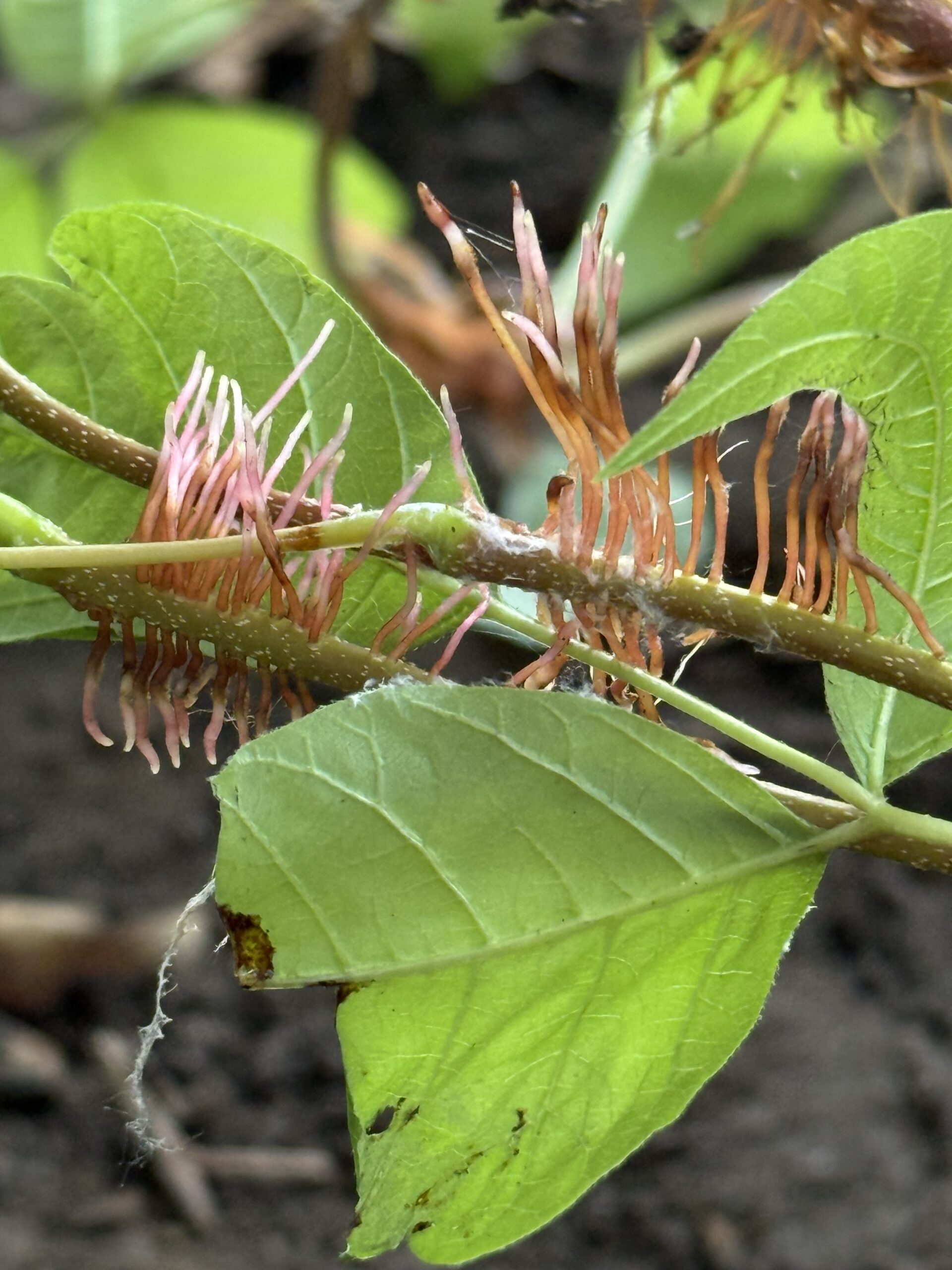
Poison Ivy Aerial Roots
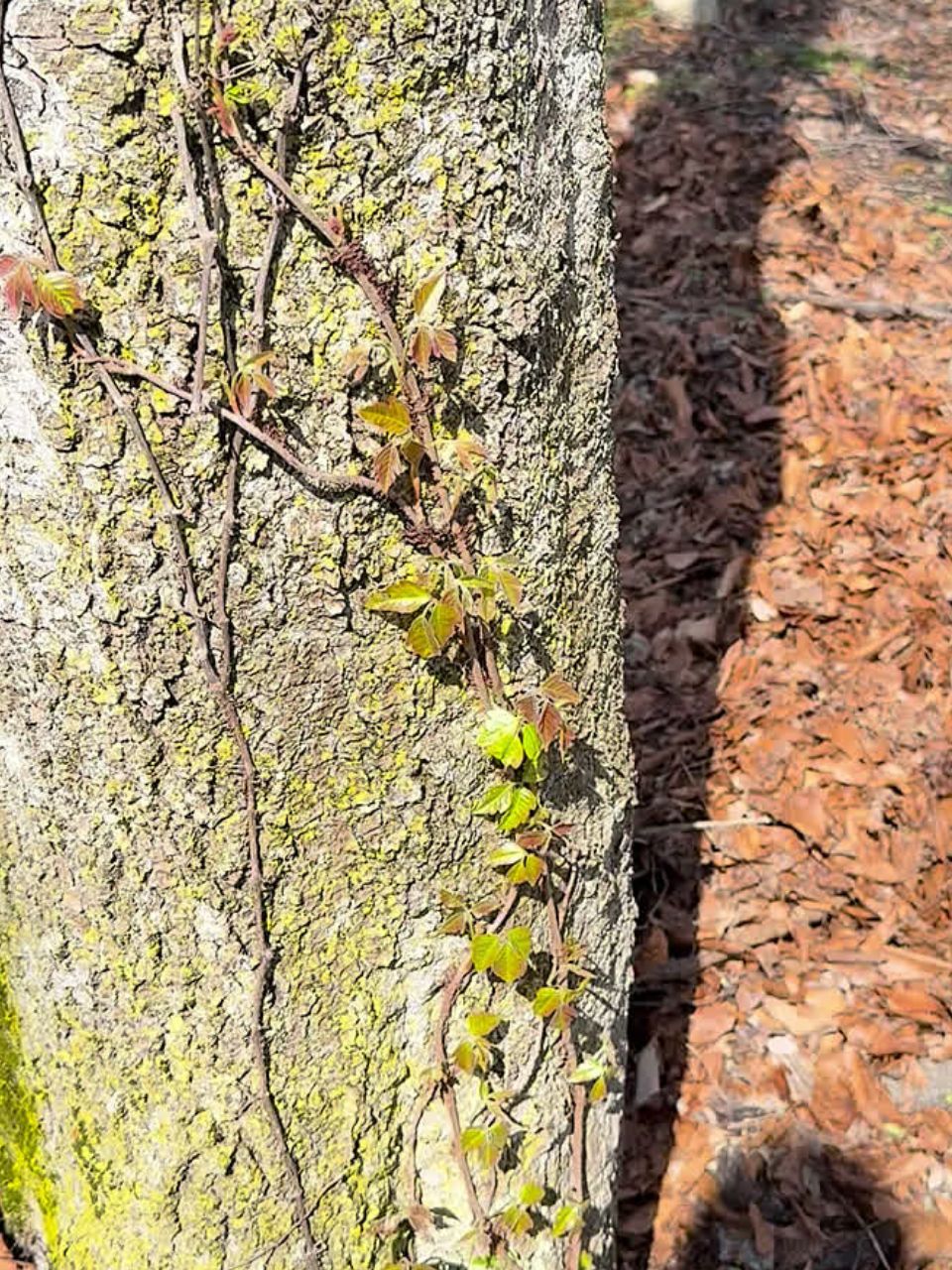
New Growth Poison Ivy April 26, 2026
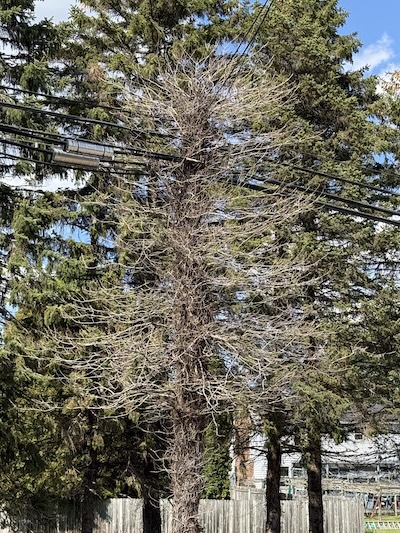
Poison Ivy Vine Shape
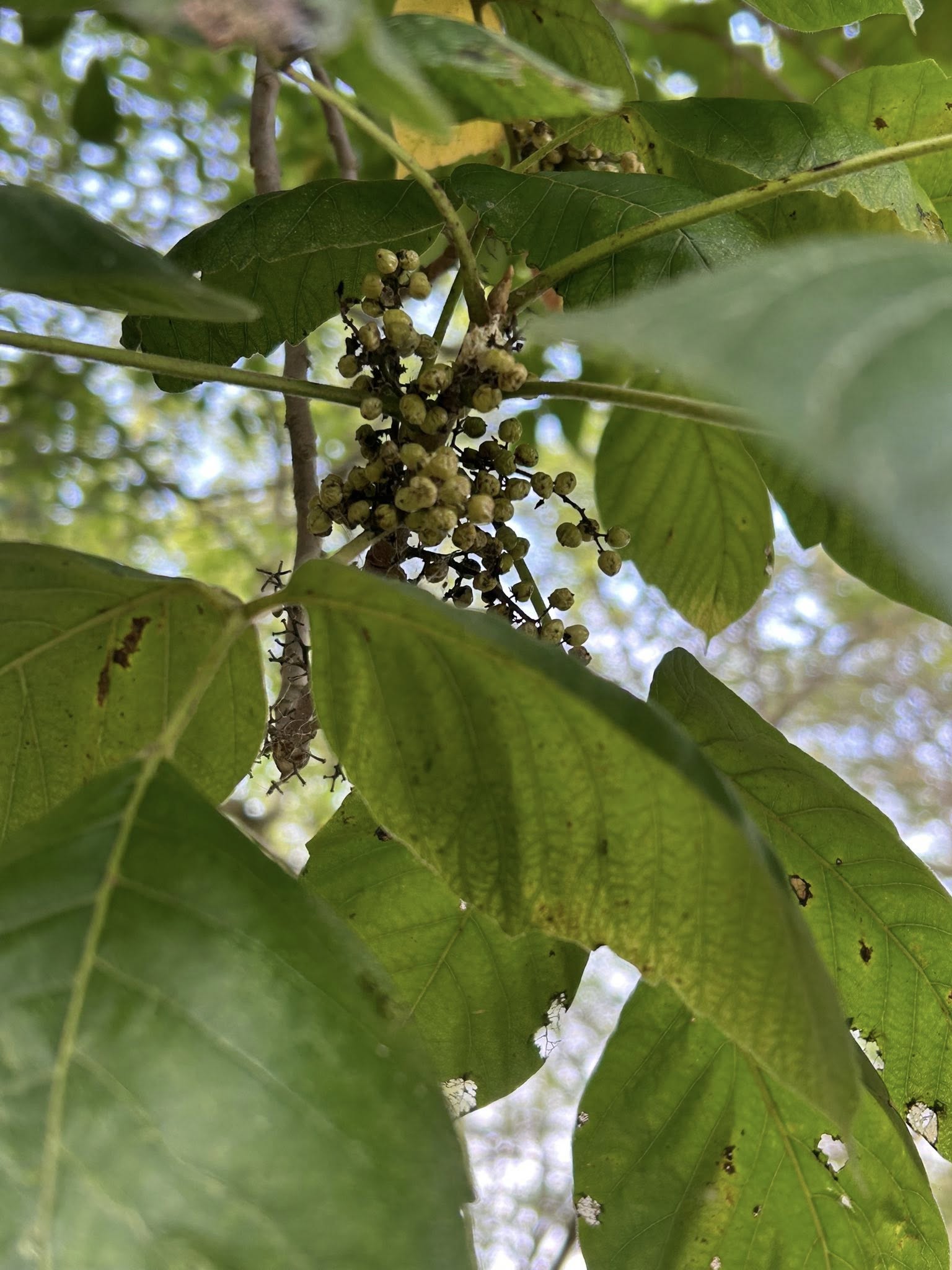
Poison Ivy Berries
Poison ivy is here, in Rochester, NY.
Poison ivy has already been visible in the Rochester area for about a month (spotted buds late April), and this is the time of year when people often miss it. The leaves may still be small, the vines may look bare or woody, and the plant can be easy to overlook until it is already growing through garden beds, fences, shrubs, trees, or along the edges of a yard.
After what felt like an 18-month Rochester winter, everyone is ready for fresh mulch, trimmed edges, cleaned-up beds, and gardens that finally look reset.
Just slow down before you grab, pull, trim, or mulch over anything.
Look before you touch.
A few things to watch for:
Poison ivy may show up as small reddish or shiny leaves close to the ground, or it may already be climbing into other plants and up trees.
Older vines can look like hairy, woody ropes attached to tree trunks.
New growth often appears along fence lines, garden edges, wooded borders, shrubs, and places where birds drop seed.
Remember, Dead-looking vines can still carry urushiol oil, which is the oil that causes the rash.
If you like to feel everything when you garden, I do too. But I strongly suggest using disposable nitrile gloves. Harbor Freight usually has boxes for around $10 and carries a variety of sizes, including smaller sizes that actually fit smaller hands. Regular garden gloves can hold urushiol oil and spread it later to your hands, tools, steering wheel, phone, pets, clothing, or anything else you touch.
If you are pulling weeds, trimming vines, resetting beds, or spreading mulch, take a minute to look, identify what is in the area first. Poison ivy is much easier to avoid before you disturb it.
If you think you may have been exposed, I put together a page that breaks down what to do after contact, including what to wash, how to wash, what to avoid, and how to think about contaminated clothing, tools, shoes, pets, and surfaces:
https://removemypoisonivy.biz/poison-ivy-what-to-do/
For people outside my local removal area, online consultations are also available. Sometimes a few clear photos and a conversation are enough to help you understand what you are looking at, where the exposure risk is, and what your next step should be.
When I started this business in 2017, a few other poison ivy professionals and I also started a Poison Ivy Education Group. That group has now grown into a community of more than 25,000 followers and members who are trying to better understand how to identify and manage poison ivy.
You can follow along here:
https://www.facebook.com/groups/PoisonIvyRemovalandEducation
I also have videos on YouTube showing what I do, how I do it, and what poison ivy removal actually looks like in real yards:
Please feel free to share this information in conversations with friends, neighbors, gardeners, or anyone who may not realize poison ivy is already active this spring.
The goal is not to panic. Poison ivy is a pest. The sooner you notice it, the more control you have. You can avoid unnecessary exposure, protect the people using your yard, and decide what to do before it spreads further.
Poison Ivy Field Notes:
Real examples, seasonal observations, and removal notes from poison ivy projects around the Rochester, NY area.


